
How a Local Specialty Shop Went from Hidden Gem to a Thriving Online Store
When a brick-and-mortar legacy finally meets a connected digital presence.
Before: A Great Shop, Invisible Online
For decades, this small family-run retailer had been part of its community’s fabric. Step inside and you’d find shelves of handmade imports, premium teas, and gifts that carried history in every detail.
Offline, the shop had heart and heritage.
Online, it barely existed.
When I first stepped in, the site had one blog post from 2019, unoptimized product descriptions, and no active SEO work. There was no Google Search Console, no Merchant Center, no Analytics 4, and an idle Business Profile that hadn’t seen an update in years.
The store’s story stopped at the sidewalk.
The Approach: Build the Foundation, Then Tell the Story
The goal wasn’t to “do SEO.” The goal was to make this business findable, believable, and connected. Both to its local customers and to search engines that mirror real trust.
Here’s how we built that step by step.
1. Established the Google Infrastructure
Created and verified Google Search Console, connecting the site for the first time to monitor indexing, queries, and crawl health.
Set up Google Merchant Center to sync the e-commerce catalog, unlocking visibility for free and paid product listings.
Linked Merchant Center, Search Console, and GA4, closing the loop between impressions, clicks, and conversions.
Reclaimed and optimized the Google Business Profile (GBP):
Added accurate hours, categories, and descriptions.
Uploaded new photos and began weekly updates to keep the profile active.
Added individual products directly into GBP, helping the shop surface in both map results and shopping panels.
Each of these steps laid bricks under what had been a hollow structure connecting visibility, tracking, and conversion into one working system.
2. Rebuilt the Website Experience
Rewrote dozens of product descriptions, replacing generic copy with keyword-aligned language that sounded human.
Improved category structure for clarity and logical navigation.
Cleaned up metadata and on-page headings for consistency.
Began a new content rhythm. Publishing blogs that wove together heritage, craftsmanship, and local culture.
Before this work, the site had one dusty post. Now, the blog feeds long-tail search growth month after month.
3. Connected Online and Offline
Worked directly with the owners to align in-store promotions with online campaigns, ensuring what shoppers saw in person matched what they found online.
Highlighted seasonal themes and community events across both channels to maintain relevance year-round.
This turned marketing into a conversation, not a broadcast.
The Results: Visibility Turned Into Revenue
Within months of launch, the data told the story.
GA4 Metrics (Year-Over-Year):
+61% Active Users
+56% Sessions
+151% Purchases
E-commerce Performance:
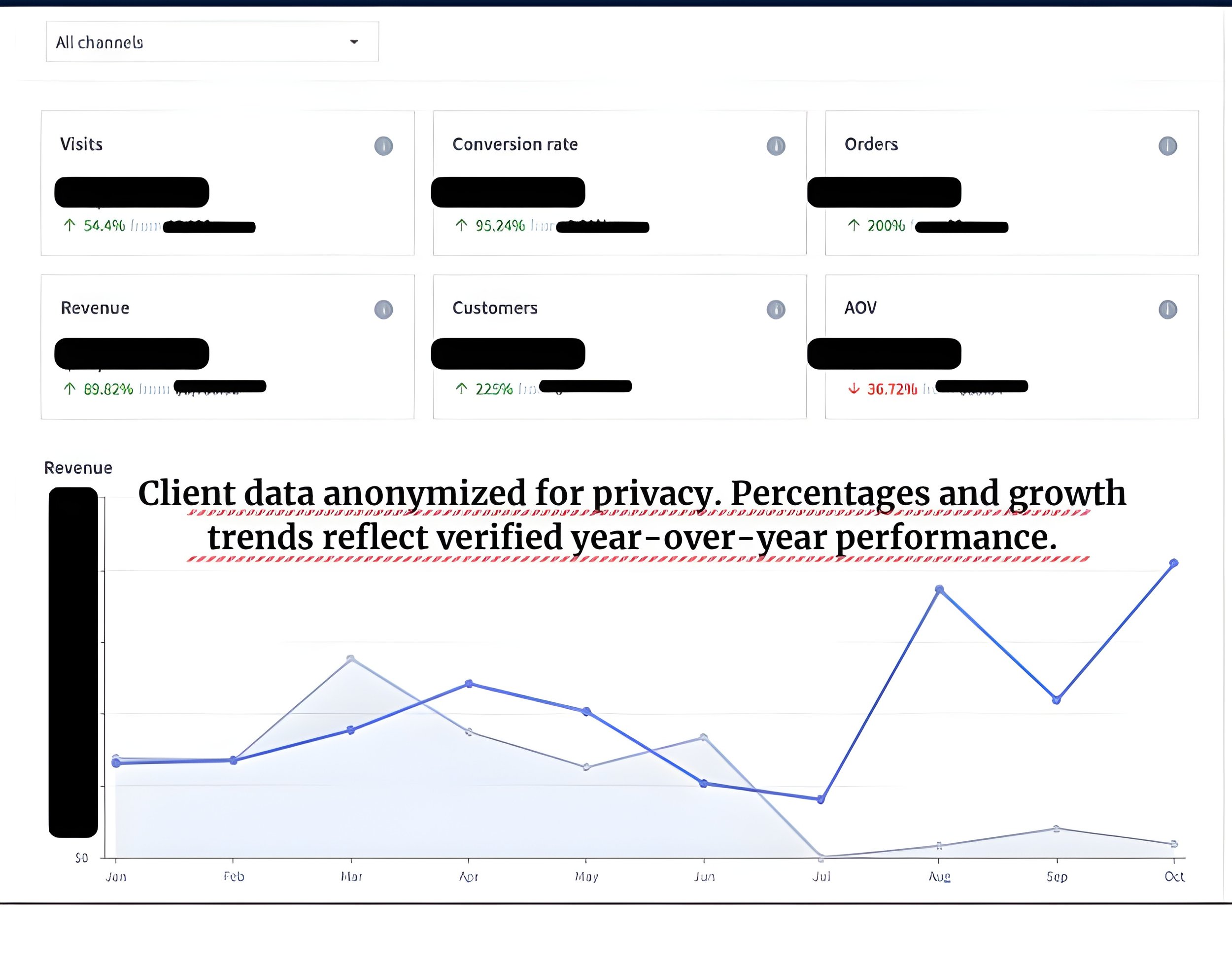
Revenue: up 89.8%
Orders: up 200%
New Customers: up 225%
Conversion Rate: nearly doubled (+95%)
Search Console Growth:
Dozens of new queries and impressions where previously there were none.
Product listings began surfacing in both organic and shopping results for local searchers.
Even with average order value dipping slightly, a normal sign of audience expansion, overall revenue and customer volume skyrocketed. The store isn’t just busier; it’s broader.
The Takeaway: Roots and Reach
When a business has roots, it doesn’t need gimmicks, it just needs to be discoverable.
This shop didn’t need a rebrand or a viral trend. It needed to bring its history into the modern search ecosystem. One blog, product description, and update at a time.
Now, the store that once relied solely on foot traffic has a measurable, growing online presence.
It didn’t happen because Google rewarded us.
It happened because people finally found what they were already looking for.
Google doesn’t buy from you. People do.
Give them something worth discovering and let Google follow their lead.